




For Starlink Mini users who need portable DC power, the Pilestone Starlink Mini UPS, 222Wh, lists a dedicated DC output and an 8+ hour runtime claim; the EZVOL Starlink Mini Battery Pack adds an IP65-rated design. For a home network and desktop setup, conventional AC UPS models such as the CyberPower CP1500PFCLCD 1500VA UPS offer multiple battery-backed outlets, but check your Starlink equipment’s power adapter and total load before choosing.
Compare at a glance
| Product | Brand | Size | Weight | Stands out for | Price |
|---|---|---|---|---|---|
| 1 CyberPower ST425 425VA UPS | CyberPower | 3.2 × 8.3 × 4.5 in | 3.8 lb | Battery backup and surge protection on four outlets | Check price |
| 2 APC BX1500M 1500VA UPS | APC | 15.04 × 3.94 × 9.84 in | 24 lb | 1500VA/900W capacity | Check price |
| 3 CyberPower CP1500PFCLCD 1500VA UPS | CyberPower | 14 × 3.9 × 11 in | 25 lb | Sinewave output for active PFC power supplies | Check price |
| 4 CyberPower EC850LCD 850VA UPS | CyberPower | 12.2 × 7 × 3.1 in | 7.7 lb | Multifunction LCD panel | Check price |
| 5 APC BE600M1 600VA UPS | APC | 10.79 × 4.13 × 5.47 in | 7.5 lb | Five battery-backed outlets | Check price |
| 6 GOLDENMATE 1000VA/600W LiFePO4 UPS | GOLDENMATE | 12.99 × 4.13 × 9.84 in | 11 lb | Eight battery-backed, surge-protected outlets | Check price |
| 7 EZVOL Starlink Mini Battery Pack | EZVOL | Not listed | 0.8 lb | Designed for Starlink Mini | Check price |
| 8 Pilestone Starlink Mini UPS, 222Wh | Pilestone | 7.5 × 2.1 × 3.5 in | 3 lb | 222Wh battery capacity | Check price |
Sizes and weights as listed by the manufacturer on Amazon. Check the retailer for current price and availability.
Pros
- Battery backup and surge protection on four outlets
- Four additional surge-protected outlets
- Three-year warranty includes the battery
Cons
- Who should skip it: users whose equipment exceeds 260W
Pros
- 1500VA/900W capacity
- AVR voltage regulation
- LCD status display
- User-replaceable battery
- UL certified
Cons
- Only five outlets provide battery backup
- Who should skip it: users needing battery backup for more than five devices
Pros
- Sinewave output for active PFC power supplies
- AVR and detailed color status display
- Six battery-backup outlets and six surge-only outlets
Cons
- Only six of the 12 outlets provide battery backup
- Who should skip it: buyers needing a lightweight UPS

Pros
- Multifunction LCD panel
- 12 total outlets
- Three-year warranty includes battery
- ECO-controlled outlets
Cons
- Only six outlets provide battery backup
- Who should skip it: users needing more than 510W
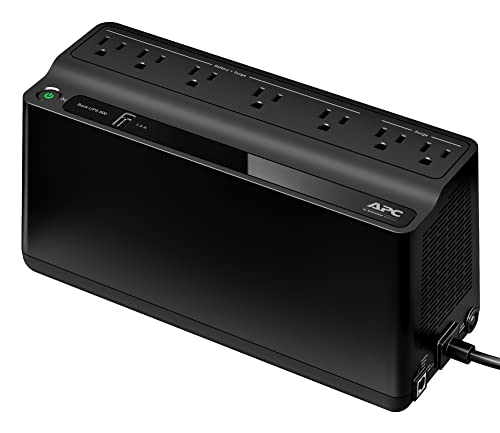
Pros
- Five battery-backed outlets
- Replaceable internal battery
- USB charging during outages
Cons
- 330W maximum capacity
- Who should skip it: users needing backup above 330W

Pros
- Eight battery-backed, surge-protected outlets
- Pure sine wave output
- LiFePO4 battery rated for over 5,000 cycles
- Color LCD with power and battery information
Cons
- 600W maximum output
- Who should skip it: users with loads above 600W

Pros
- Designed for Starlink Mini
- UPS backup and bypass charging
- Hot-swap battery support
- 0.8-pound listed weight
Cons
- Charger not included
- Who should skip it: buyers needing an included charger

Pros
- 222Wh battery capacity
- Automatic restart after power returns
- Simultaneous DC and USB-C output
- Three recharge options
Cons
- Who should skip it: users who need an AC output
Key Numbers at a Glance
- The Pilestone Starlink Mini UPS, 222Wh lists a 222Wh battery and an 8+ hour Starlink Mini runtime claim.
- The EZVOL Starlink Mini Battery Pack lists 127Wh, bypass charging, and hot-swap battery support.
- The CyberPower CP1500PFCLCD 1500VA UPS is rated at 1500VA/1000W, compared with 1500VA/900W for the APC BX1500M 1500VA UPS.
- The GOLDENMATE 1000VA/600W LiFePO4 UPS lists a 153.6Wh battery and eight battery-backed outlets.
Best Portable Starlink Mini Backup: Pilestone Starlink Mini UPS, 222Wh
Pilestone Starlink Mini UPS, 222Wh suits mobile Starlink Mini setups with its dedicated DC output, 222Wh battery, and manufacturer-stated 8+ hour runtime. It also has a 140W USB-C output and can recharge from an AC adapter, a 12V car outlet, or solar panel. The product page does not state an IP rating, so check environmental protection needs before outdoor use. Skip it if your Starlink equipment is not the Mini or you need a stated weather-resistance rating.
Related guides: Best UPS Battery Backup for Home, Best UPS Battery Backup for Small Business and Best UPS Battery Backup for Sump Pump.
Best Weather-Resistant Starlink Mini Backup: EZVOL Starlink Mini Battery Pack
EZVOL Starlink Mini Battery Pack is designed specifically for Starlink Mini and lists an IP65 rating, bypass charging, and hot-swap battery support. Its listed battery capacity is 127Wh, lower than the Pilestone model’s 222Wh, so capacity and planned runtime deserve close attention. Skip it if you need the larger listed battery capacity or your Starlink hardware is not a Mini.
Best for AC-Powered Home Networks: CyberPower CP1500PFCLCD 1500VA UPS
CyberPower CP1500PFCLCD 1500VA UPS combines a 1500VA/1000W rating, six battery-backed outlets, and sine-wave output. That makes it worth considering when you want one UPS for compatible networking gear and a computer, but the listing does not give Starlink-specific runtime. Skip it if you need a portable DC battery pack or an outdoor-oriented Starlink Mini system.
How to Choose a UPS Battery Backup for Starlink
Match the output to your Starlink hardware
Bottom line: Confirm whether your Starlink setup accepts the UPS’s output before buying. The Pilestone and EZVOL products are specifically marketed for Starlink Mini, while the APC and CyberPower desktop UPS models provide AC outlets. Check your equipment’s power input and adapter requirements; a standard AC UPS is not interchangeable with a purpose-built DC battery pack just because both provide backup power.
Size capacity and runtime for the outage
Bottom line: Treat runtime as dependent on the connected load, not a guarantee. Pilestone lists 222Wh and an 8+ hour claim for Starlink Mini, while EZVOL lists 127Wh. The APC BX1500M specifies up to 68 minutes at a 100W load, but that figure is not a Starlink-specific runtime. Allow for other equipment on the UPS and the power draw of your exact Starlink model.
Check wattage and connected devices
Bottom line: Add the load of every device you plan to back up and stay within the UPS wattage rating. The CyberPower CP1500PFCLCD is rated for 1000W, the APC BX1500M for 900W, and the GOLDENMATE 1000VA/600W LiFePO4 UPS for 600W. These ratings describe maximum output, not expected runtime. A router, Starlink unit, monitor, and PC all draw from the same available capacity.
Choose outlet count and outlet roles
Bottom line: Count battery-backed outlets, not just total outlets. The CyberPower CP1500PFCLCD has 12 outlets, six with battery backup; the APC BX1500M has 10, with five battery-backed. The CyberPower ST425 425VA UPS has four battery-backed outlets among its eight total. Check plug spacing and which devices must stay on during an outage.
Consider sine wave, voltage regulation, and monitoring
Bottom line: Prioritize output type and power monitoring when your connected equipment needs them. CyberPower CP1500PFCLCD specifies sine-wave output and AVR, while the CP1500AVRLCD3 uses simulated sine wave and AVR. Several models include LCD status displays, which can show power or battery information; do not assume all power supplies or Starlink adapters behave identically on every waveform. Verify compatibility with the equipment manufacturer if uncertain.
How We Compared These Products
This guide evaluates listed capacity, wattage, output type, outlet configuration, portability claims, and stated Starlink Mini compatibility. It is based on product research, not firsthand evaluation. Product-page runtime claims can vary with connected load, so use them as guidance rather than a guarantee.
Which Option Fits Your Home and Devices?
Choose the Pilestone Starlink Mini UPS, 222Wh when portable power, DC output, and its stated runtime claim are the priorities. Choose the EZVOL Starlink Mini Battery Pack when its IP65 rating and bypass charging matter more than the Pilestone unit’s larger listed capacity. For a home desk with networking devices and a computer, compare AC models by wattage, waveform, and battery-backed outlets, and browse our UPS and surge protector category for related options.
Mistakes to Avoid When Choosing a Starlink UPS
- Buying by battery capacity alone. Confirm output type, device power draw, and runtime at your intended load.
- Assuming every Starlink model uses the same connection. Check the exact model and power input; the two dedicated battery packs here specify Starlink Mini.
- Counting every outlet as battery-backed. Review outlet roles: several desktop UPS models divide battery outlets from surge-only outlets.
- Ignoring outdoor conditions. If the pack will be exposed to dust or rain, verify its stated rating and follow the manufacturer’s placement and use instructions.
Frequently Asked Questions
Can I use a regular AC UPS with Starlink?
That depends on the Starlink model and its power adapter. AC UPS models in this guide provide standard AC outlets, while the Pilestone and EZVOL packs are specifically designed for Starlink Mini. Check your equipment’s input requirements and the UPS output before connecting it.
Which battery pack is better for Starlink Mini, Pilestone or EZVOL?
The Pilestone lists 222Wh and an 8+ hour runtime claim, plus 140W USB-C output. EZVOL lists 127Wh, IP65 protection, bypass charging, and hot-swap support. Choose based on capacity and charging features, while checking the manufacturer’s current compatibility details.
How long will a UPS run Starlink?
Runtime depends on the Starlink model, connected load, and UPS capacity. Pilestone claims 8+ hours for its 222Wh pack with Starlink Mini; conventional AC UPS runtime figures in this guide are stated for particular loads or are not Starlink-specific.
Should I connect my router and computer to the same UPS?
You can consider it if the UPS has enough wattage and battery-backed outlets for the combined load. For example, the CyberPower CP1500PFCLCD is rated at 1000W and has six battery-backed outlets. Add the devices’ power requirements and leave capacity within the UPS rating.
Does a higher VA rating guarantee longer runtime?
No. VA and wattage ratings describe output capacity, while runtime also depends on battery energy and connected load. Compare stated battery capacity and load-specific runtime where available, and avoid treating one model’s claim as a prediction for another setup.


Write Your Review
No reviews yet. Be the first to share your experience!