


If you record, produce, or arrange music, the wrong laptop can leave too little memory or storage for your software and projects, while an unverified port setup can complicate connecting an audio interface. This guide to the best laptops for musicians compares listed memory, storage, screens, and connections, while flagging where product details are too limited to confirm suitability for demanding recording sessions.
Compare at a glance
| Product | Brand | Size | Weight | Stands out for | Price |
|---|---|---|---|---|---|
| 1 Acer Aspire Go 15, 15.6-inch FHD | Acer | 14.29 × 0.78 × 9.44 in | 3.8 lb | 15.6-inch FHD IPS display | Check price |
| 2 HP 17.3-Inch Laptop, 16GB RAM | HP | 15.78 × 10.15 × 0.81 in | Not listed | 17.3-inch Full HD anti-glare display | Check price |
| 3 HP 14-Inch Renewed Laptop, Celeron | HP | 12.9 × 8.9 × 0.9 in | 4 lb | Three USB-A ports | Check price |
| 4 JSLWWQ 50-Piece Musical Instrument Stickers | JSLWWQ | 3 × 2 × 0.3 in | Not listed | 50 non-repeating music designs | Check price |
| 5 Jacuate AK6-Lucky Wired Gaming Earbuds | Jacuate | 3.66 × 2.52 × 1.3 in | 0.1 lb | Three selectable sound profiles | Check price |
| 6 QLCBELOVE 2-in-1 Wooden Music Stand | QLCBELOVE | 1 × 1 × 1 in | Not listed | Floor and desktop configurations | Check price |
| 7 RIANIFEL 15.6-Inch Laptop, 16GB RAM | RIANIFEL | 14 × 9.2 × 0.75 in | 4.862E-6 pounds | Full HD IPS display with 300-nit brightness | Check price |
Sizes and weights as listed by the manufacturer on Amazon. Check the retailer for current price and availability.
Pros
- 15.6-inch FHD IPS display
- Two full-function USB-C ports
- Wi-Fi 6 connectivity
- HDMI 2.1 output
Cons
- Who should skip it: users needing larger local storage
Best for a larger built-in workspace
Pros
- 17.3-inch Full HD anti-glare display
- Built-in numeric keypad
- 16GB RAM and 512GB SSD
- Windows 11 included
Cons
- Office 365 is for the web, not included desktop applications
- Who should skip it: buyers needing desktop Office applications
Pros
- Three USB-A ports
- Built-in webcam and microphone
- SD card reader
Cons
- 4GB RAM and 64GB SSD limit multitasking and storage
- Who should skip it: users running demanding workloads

Pros
- 50 non-repeating music designs
- Removable adhesive for rearranging
- Several suggested decorating uses
Cons
- Who should skip it: shoppers seeking non-music designs

Pros
- Three selectable sound profiles
- Detachable 2-pin cable
- Inline microphone and remote
Cons
- Wired connection requires a compatible 3.5mm jack
- Who should skip it: listeners who need wireless earbuds

Pros
- Floor and desktop configurations
- Adjustable height and angle
- Solid wood tabletop
- No-tool assembly
Cons
- Who should skip it: users needing support above 6.6 lb

Pros
- Full HD IPS display with 300-nit brightness
- 16GB RAM and M.2 SSD
- Preinstalled Windows 11 and Office 2024
- Physical webcam privacy cover
- Numeric keypad and four built-in speakers
Cons
- 256GB SSD may be limiting for large file libraries
- Who should skip it: users needing more demanding computing performance
Best Large-Screen Laptop for Music Work: HP 17.3-Inch Laptop, 16GB RAM
HP 17.3-Inch Laptop, 16GB RAM combines 16GB RAM and a 512GB SSD with a 17.3-inch FHD display, giving you more listed memory and storage than several other laptop entries here. The product page does not identify the Ryzen 5 model or provide audio-interface details, so check the exact processor and connections before choosing it for a DAW setup. Skip it if you need a compact machine for frequent travel or confirmed interface compatibility.
Best Listed Memory and Port Mix on a Budget: RIANIFEL 15.6" FHD Laptop, 6500Y, 16GB RAM
RIANIFEL 15.6" FHD Laptop, 6500Y, 16GB RAM lists 16GB RAM, a 256GB M.2 SSD, and USB 3.2, USB 2.0, USB-C charging, HDMI, and a 3.5mm audio jack. Its Pentium Gold 6500Y is a 2-core, 4-thread processor, so the stated memory capacity alone does not establish how it will handle a large, demanding audio project. Skip it if your sessions rely on heavy plug-in loads or you need more than 256GB internal storage.
Related guides: Best Laptops for FL Studio, Best Laptops for Designers and Best Laptops for DJing.
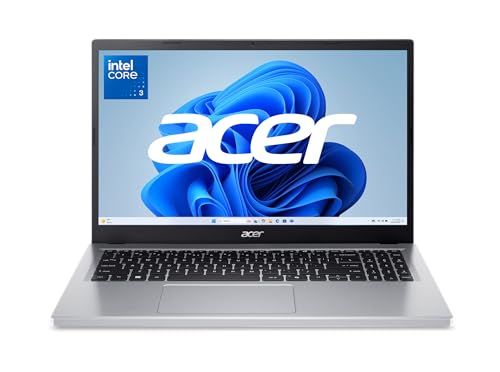
Best Full HD Display for Everyday Music Tasks: Acer Aspire Go 15, 15.6-inch FHD
Acer Aspire Go 15, 15.6-inch FHD has a 15.6-inch 1920 × 1080 IPS display and two full-function USB-C ports, which can suit notation, lessons, and general music administration if your peripherals match its connections. It lists 8GB RAM and 128GB UFS storage, both limited compared with the 16GB RAM and larger SSD listed for the HP 17.3-Inch Laptop. Skip it if your music library and project files need substantial local storage or your DAW workflow calls for more memory.
Key Numbers at a Glance
- Listed memory ranges from 4GB in the HP OmniBook 3 16-inch Laptop to 16GB in the HP 17.3-Inch Laptop, 16GB RAM and RIANIFEL 15.6" FHD Laptop, 6500Y, 16GB RAM.
- Listed internal storage ranges from 64GB SSD in the HP 14-Inch Renewed Laptop, Celeron to 512GB SSD in the HP 17.3-Inch Laptop, 16GB RAM.
- Display sizes among the featured laptop picks range from 15.6 inches on the Acer Aspire Go 15, 15.6-inch FHD and RIANIFEL 15.6" FHD Laptop, 6500Y, 16GB RAM to 17.3 inches on the HP 17.3-Inch Laptop, 16GB RAM.
- The RIANIFEL 15.6" FHD Laptop, 6500Y, 16GB RAM lists 2 USB 3.2 ports, while the Acer Aspire Go 15, 15.6-inch FHD lists 2 full-function USB-C ports.
How to Choose a Laptop for Music Production
Memory and Processor for Your DAW
Bottom line: Start with your audio software’s requirements, then favor a listed 16GB configuration over 4GB or 8GB when your projects use multiple tracks and plug-ins. The HP 17.3-Inch Laptop, 16GB RAM and RIANIFEL 15.6" FHD Laptop, 6500Y, 16GB RAM list 16GB RAM, while the Acer Aspire Go 15, 15.6-inch FHD lists 8GB and the HP Stream 14-Inch Laptop, N150 lists 4GB. The RIANIFEL’s 2-core, 4-thread processor is specifically identified, but the HP listing does not give an exact Ryzen 5 model; neither memory alone nor a broad processor label proves performance in your DAW. Confirm the software’s CPU and memory requirements, and check whether memory can be upgraded, since the product details do not establish upgradeability.
Storage for Projects and Sample Libraries
Bottom line: Match internal storage to your project and library needs, and verify whether you can add or connect storage the way you plan. The HP 17.3-Inch Laptop, 16GB RAM lists a 512GB SSD, the RIANIFEL lists a 256GB M.2 SSD, and the Acer Aspire Go 15 lists 128GB UFS. These are different capacities and storage types, and the product details do not establish available upgrade slots or real-world transfer performance. If you use large sample libraries, check the DAW and library requirements and plan for the actual storage connection you intend to use.
Ports and Audio Interface Compatibility
Bottom line: Match the laptop’s listed ports to your interface and other gear, rather than assuming USB-C means every connection feature. The Acer Aspire Go 15 lists two full-function USB-C ports and HDMI 2.1; the RIANIFEL lists USB 3.2, USB 2.0, USB-C charging, HDMI, and a 3.5mm audio jack. The HP Stream 14-Inch Laptop, N150 lists USB-C, two USB-A ports, HDMI 1.4b, and a headphone/microphone combo jack. Check the interface manufacturer’s connection and operating-system requirements, and confirm the exact laptop port capabilities before buying.
Screen Size, Resolution, and Workspace
Bottom line: Choose a display size and resolution that make your DAW tracks readable without making the laptop inconvenient for your space. The Acer Aspire Go 15 has a 15.6-inch FHD IPS display, while the HP 17.3-Inch Laptop has a 17.3-inch FHD screen; the HP OmniBook 3 16-inch Laptop lists a 16-inch 2K display. A larger screen can provide more physical workspace, but the product data does not establish color accuracy, brightness for these models, or an external-display setup beyond the listed ports. If you plan to work with an external monitor, verify the laptop’s supported output and your monitor’s input.
Operating System, Portability, and Upgrade Plans
Bottom line: Confirm software support, laptop size, and upgrade options before treating a low-cost configuration as a long-term music workstation. Several listed models use Windows 11, while the Acer Aspire Go 15 is specified with Windows 11 Home in S mode; check whether your chosen DAW and installation needs work with the configured operating system. The HP 17.3-inch screen favors a larger workspace, while the HP Stream’s listed dimensions are 12.74 × 8.46 × 0.7 inches and its weight is 3.09 lb. Product details do not consistently state weight, battery capacity, memory upgradeability, or support terms, so confirm those details with the manufacturer before purchase.
How We Compared These Products
This guide is based on product research, not firsthand evaluation. We compared the listed processor, memory, storage, display, ports, operating-system details, and other stated features, and treated unsupported claims about DAW performance or audio-interface compatibility as points for buyers to verify. The product cards also include accessories and non-laptop items, so this guide focuses its laptop recommendations on the models with relevant computer specifications.
Which Option Fits Your Music Setup?
For a larger built-in workspace and more listed memory: HP 17.3-Inch Laptop, 16GB RAM has a 17.3-inch FHD display, 16GB RAM, and a 512GB SSD. Skip it if desk space or portability matters more, or if you need a precisely identified processor and verified interface compatibility before deciding.
For a varied listed connection selection with 16GB RAM: RIANIFEL 15.6" FHD Laptop, 6500Y, 16GB RAM combines 16GB RAM with USB 3.2, USB 2.0, USB-C charging, HDMI, and a 3.5mm jack. Skip it if your workload needs a higher specified processor class or more than 256GB internal storage.
For notation, lessons, and general tasks on a Full HD IPS screen: Acer Aspire Go 15, 15.6-inch FHD lists a 15.6-inch 1080p IPS display and two full-function USB-C ports. Skip it if 8GB RAM or 128GB UFS storage does not fit your software and project needs. For more screen and memory trade-offs, see our best laptops under $300 guide.
Mistakes to Avoid When Choosing a Music Laptop
- Buying by memory alone. Check the DAW’s processor requirements as well as RAM; a 16GB listing does not establish suitability for every project.
- Assuming every USB-C port does the same thing. Compare the precise port functions against your interface, hub, and charging needs.
- Underestimating project storage. Compare listed internal capacity with your DAW, projects, and sample libraries, then verify expansion options.
- Assuming all Windows configurations fit your software. Confirm the DAW’s operating-system requirements, especially for a laptop listed with Windows 11 Home in S mode.
Frequently Asked Questions
How much RAM should a laptop for music production have?
These listings range from 4GB to 16GB RAM. The HP 17.3-Inch Laptop, 16GB RAM and RIANIFEL 15.6" FHD Laptop, 6500Y, 16GB RAM list 16GB, but check your DAW’s actual requirements and confirm whether memory is upgradeable.
Can I connect an audio interface to these laptops?
Some listings identify USB-A, USB-C, or a 3.5mm audio jack, but they do not confirm compatibility with a particular interface. Compare the interface’s connection and operating-system requirements with the exact laptop model and port functions before buying.
Is 128GB of storage enough for music production?
The Acer Aspire Go 15 lists 128GB UFS storage, while the HP 17.3-Inch Laptop lists a 512GB SSD. Whether either capacity is enough depends on your software, project files, and sample libraries; check their storage needs and verify expansion options.
Is a 15.6-inch or 17.3-inch laptop better for a DAW?
The 17.3-inch HP provides a larger listed screen, while the Acer and RIANIFEL models have 15.6-inch displays. Choose based on how much screen workspace you need and how often you move the laptop; the listing data does not establish the exact workspace your DAW will show.
Can I use the Acer Aspire Go 15 with music software?
The Acer lists an Intel Core 3 N355 processor, 8GB RAM, 128GB UFS storage, and Windows 11 Home in S mode. The product details do not confirm compatibility with a specific DAW, so check the software’s operating-system, processor, memory, and installation requirements first.





Write Your Review
No reviews yet. Be the first to share your experience!