


If you are a student coding between classes, a developer running virtual machines, or a remote worker juggling code and video calls, the right laptop depends on workload and memory more than the size of the screen alone. This guide to the best laptops for coding compares portable everyday machines with higher-memory systems, so you can weigh multitasking, storage, display space, ports, and upgrade plans.
Compare at a glance
| Product | Brand | Size | Weight | Stands out for | Price |
|---|---|---|---|---|---|
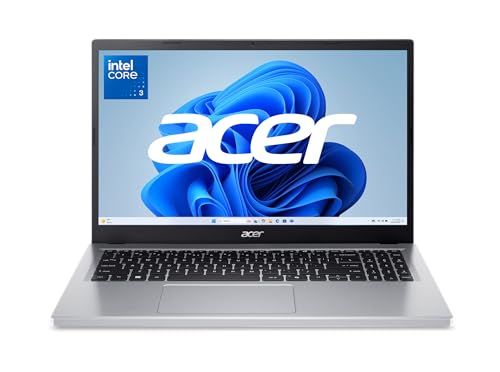
| 1 Acer Aspire Go 15, 15.6-inch FHD | Acer | 14.29 × 0.78 × 9.44 in | 3.8 lb | 15.6-inch FHD IPS display | Check price |
| 2 HP 17.3-Inch Laptop, 16GB RAM | HP | 15.78 × 10.15 × 0.81 in | Not listed | 17.3-inch Full HD anti-glare display | Check price |
| 3 ASUS Zenbook Duo Dual 14-Inch OLED Laptop | ASUS | 12.21 × 0.77 × 8.21 in | 3.6 lb | Dual 3K OLED touchscreens with 144Hz refresh rate | Check price |
| 4 NIMO 15.6-Inch Ryzen 5 Laptop | NIMO | 14.07 × 8.98 × 0.76 in | 3.8 lb | 16GB RAM supports everyday multitasking | Check price |
Sizes and weights as listed by the manufacturer on Amazon. Check the retailer for current price and availability.
Best for a more modest study setup
Pros
- 15.6-inch FHD IPS display
- Two full-function USB-C ports
- Wi-Fi 6 connectivity
- HDMI 2.1 output
Cons
- Who should skip it: users needing larger local storage
Pros
- 17.3-inch Full HD anti-glare display
- Built-in numeric keypad
- 16GB RAM and 512GB SSD
- Windows 11 included
Cons
- Office 365 is for the web, not included desktop applications
- Who should skip it: buyers needing desktop Office applications
Pros
- Dual 3K OLED touchscreens with 144Hz refresh rate
- 32GB RAM and 1TB SSD
- Includes sleeve and ASUS Pen 3.0
- Thunderbolt 4 and HDMI 2.1 ports
Cons
- 3.64 lb weight may add to carrying burden
- Who should skip it: shoppers wanting a conventional single-screen laptop

Pros
- 16GB RAM supports everyday multitasking
- Upgradeable memory and storage
- Backlit keyboard for dim environments
- Fingerprint reader integrated into touchpad
- Broad selection of ports
Cons
- Single M.2 slot limits storage upgrade flexibility
- Who should skip it: users needing discrete graphics
Best for Multitasking: NIMO 17.3-Inch Ryzen 9 Laptop
NIMO 17.3-Inch Ryzen 9 Laptop pairs a Ryzen 9 8945HS with 32GB DDR5 and a 1TB SSD, a strong listed configuration for developers keeping virtual machines, coding tools, and calls open together. Its 17.3-inch display gives more room for windows, and the listing specifies two M.2 SSD slots and memory expansion up to 64GB. The trade-off is a larger chassis, and the product page does not state the display’s native resolution. Skip it if you prioritize a compact laptop or need a clearly stated built-in display resolution before buying.
Best Large-Screen Coding Laptop: NIMO 17.3" FHD Light-Gaming-Laptop
NIMO 17.3" FHD Light-Gaming-Laptop combines an 8-core, 16-thread Ryzen 7 7735HS with 16GB DDR5, a 1TB SSD, and a 17.3-inch Full HD screen. Its two M.2 slots and two memory slots, expandable to 64GB, leave room to grow, while USB-C ports support PD charging, DisplayPort output, and data. Integrated Radeon 680M graphics are aimed at everyday visuals and light gaming, not a stated dedicated graphics setup. Skip it if you need a smaller screen or dedicated graphics for a graphics-heavy workflow.
Best for an Upgrade Path: NIMO 15.6" FHD R5 AI Student Laptop
NIMO 15.6" FHD R5 AI Student Laptop starts with 16GB RAM and a 512GB SSD, with two memory slots supporting up to 32GB and an M.2 SSD slot listed for upgrades up to 4TB. A backlit keyboard, two USB-C ports with separate charging and full-function roles, and HDMI 1.4 suit a study or desk setup. The listing describes a 4-core Ryzen 5, so it is a more modest CPU configuration than the Ryzen 9 model above. Skip it if your projects depend on high core counts or you want more than a 15.6-inch display.
Best for a Low-Cost Coding Setup: Acer Aspire Go 15, 15.6-inch FHD
Acer Aspire Go 15, 15.6-inch FHD has a 15.6-inch 1080p IPS screen and two full-function USB-C ports, with Wi-Fi 6 for everyday study and web-based coding. Its 8GB of memory and 128GB UFS storage are limiting for large projects, several development tools, or virtual machines, and Windows 11 Home in S mode may affect which software you can install until you check the mode’s restrictions. Skip it if your workflow needs substantial local storage, heavier multitasking, or unrestricted desktop software without changing settings.
Key Numbers at a Glance
- Memory ranges from 8GB in the Acer Aspire Go 15, 15.6-inch FHD to 32GB in the NIMO 17.3-Inch Ryzen 9 Laptop.
- Listed SSD capacity ranges from 512GB in the NIMO 15.6" FHD R5 AI Student Laptop to 1TB in the NIMO 17.3-Inch Ryzen 9 Laptop.
- Screen sizes in the highlighted picks range from 15.6 inches in the NIMO 15.6" FHD R5 AI Student Laptop to 17.3 inches in the NIMO 17.3" FHD Light-Gaming-Laptop.
- The Acer Aspire Go 15, 15.6-inch FHD specifies 128GB UFS storage, while the NIMO 17.3-Inch Ryzen 9 Laptop lists a 1TB SSD.
How to Choose a Laptop for Coding
Memory and workload
Bottom line: Match RAM to the number and type of development tools you run at once. The NIMO 17.3-Inch Ryzen 9 Laptop lists 32GB, while the NIMO 17.3" FHD Light-Gaming-Laptop and NIMO 15.6" FHD R5 AI Student Laptop each list 16GB. More memory gives you more headroom for simultaneous applications, but it does not by itself guarantee faster builds; compare the processor and your actual software requirements too. For coursework and a code editor, prioritize a suitable processor and enough memory for your IDE, browser, and development environment. For virtual machines or local data work, compare the 32GB configuration and the stated upgrade limits.
Processor and graphics
Bottom line: Choose the CPU for compiling and multitasking, and treat integrated graphics as a separate trade-off. The NIMO 17.3-Inch Ryzen 9 Laptop lists a Ryzen 9 8945HS, while the NIMO 17.3" FHD Light-Gaming-Laptop specifies a Ryzen 7 7735HS with 8 cores and 16 threads. The latter’s Radeon 680M is integrated graphics, as is the Radeon 780M in the Ryzen 9 model, rather than a listed discrete GPU. If your coding work involves graphics development, check the software’s specific GPU needs; for general coding, CPU, memory, and storage are usually more central purchase criteria.
Screen size and workspace
Bottom line: Pick a screen size that fits your desk and the way you arrange code, documentation, and terminals. The NIMO 17.3" FHD Light-Gaming-Laptop and the NIMO 17.3-Inch Ryzen 9 Laptop both list 17.3-inch displays; the NIMO 15.6" FHD R5 AI Student Laptop lists 15.6 inches. A larger screen can make side-by-side windows easier to arrange, but it takes more room in a bag and on a small desk. Check the exact resolution and brightness for the specific configuration: the Ryzen 7 model lists Full HD, while the Ryzen 9 page mentions 4K support but does not establish that as the built-in panel’s native resolution.
Storage and upgradeability
Bottom line: Look at capacity and upgrade details together, especially if you keep projects, containers, or virtual machines locally. The NIMO 17.3-Inch Ryzen 9 Laptop lists a 1TB SSD and dual M.2 slots; the NIMO 17.3" FHD Light-Gaming-Laptop also lists a 1TB SSD and two M.2 slots. The NIMO 15.6" FHD R5 AI Student Laptop lists 512GB and one M.2 slot. Before buying, confirm the exact configuration and whether the memory or storage is user-upgradeable; listed expansion support is not a guarantee that a particular drive or module is included.
Ports, charging, and operating system
Bottom line: Check the ports and software environment against your monitor, dock, and development tools. The NIMO 17.3" FHD Light-Gaming-Laptop lists USB-C with DisplayPort output and PD charging, plus HDMI and USB-A; the Acer Aspire Go 15, 15.6-inch FHD lists two full-function USB-C ports and HDMI 2.1. USB-C capabilities vary by laptop, so verify which port supports charging, display, and data rather than assuming they all do. The Acer comes with Windows 11 Home in S mode, while the other highlighted NIMO models list Windows 11 Home; check software requirements and any mode restrictions before choosing.
If your laptop will also serve as a study or office machine, compare the workload guidance in our best laptops for business students guide. For workloads involving audio production alongside coding, see best laptops for FL Studio.
How We Compared These Products
This guide is based on product research, not firsthand evaluation. We compared the listed processors, memory, storage, display details, ports, operating systems, expansion information, and stated support terms; customer feedback was not available in the product data, so recommendations rely on listed specifications rather than reported owner experiences.
Which Option Fits Your Coding Setup?
For virtual machines or heavy multitasking: NIMO 17.3-Inch Ryzen 9 Laptop has 32GB RAM, a Ryzen 9 processor, and dual M.2 slots. Skip it if you need a more compact screen or clearly stated native display resolution.
For a large coding workspace with room to upgrade: NIMO 17.3" FHD Light-Gaming-Laptop combines a 17.3-inch Full HD screen with 16GB RAM, a 1TB SSD, and expansion to 64GB RAM. Skip it if portability or dedicated graphics matters more than screen space.
For a more modest study setup: Acer Aspire Go 15, 15.6-inch FHD offers a 1080p IPS screen and two full-function USB-C ports. Skip it if 8GB memory or 128GB UFS storage falls short of your development tools and project files.
For other work-focused configurations, browse our business laptops category. If coding is part of a gaming setup, our guide to best laptops for gamers on a budget covers graphics and screen trade-offs.
Mistakes to Avoid When Choosing a Coding Laptop
- Choosing by processor name alone. Compare the listed CPU, RAM, and your development tools together; a model label does not describe every workload advantage.
- Ignoring memory limits. Check installed RAM and the stated maximum upgrade, especially if you plan to run virtual machines or several tools at once.
- Assuming every USB-C port does everything. Verify the particular port’s listed display, data, and charging functions before planning a dock or monitor connection.
- Overlooking storage type and capacity. A 128GB UFS configuration differs from a 512GB or 1TB SSD; estimate space for applications, source files, and local development environments.
Frequently Asked Questions
How much RAM do you need for coding?
It depends on your tools and whether you run virtual machines or other memory-heavy applications. Among these picks, configurations range from 8GB to 32GB, with some NIMO models listing memory upgrades; check the requirements of your IDE and development environment.
Is a 17.3-inch laptop better for coding?
A 17.3-inch screen gives you a larger built-in workspace, as seen on the NIMO 17.3" FHD Light-Gaming-Laptop and NIMO 17.3-Inch Ryzen 9 Laptop. It is not automatically better if you carry your laptop often or have limited desk space; the 15.6-inch models are smaller alternatives.
Can these laptops connect to an external monitor?
The NIMO 17.3" FHD Light-Gaming-Laptop lists USB-C DisplayPort output and HDMI, and the Acer Aspire Go 15, 15.6-inch FHD lists HDMI 2.1 and full-function USB-C ports. Check the exact port capabilities and the monitor’s input before choosing a cable or dock.
Is 128GB storage enough for programming?
It can be restrictive if you install multiple development tools, keep local datasets, or use virtual machines. The Acer Aspire Go 15, 15.6-inch FHD lists 128GB UFS storage, while several NIMO configurations list 512GB or 1TB SSDs, so match capacity and storage type to your software and files.
Can you upgrade the RAM or SSD later?
Upgrade details vary by model. The NIMO 17.3-Inch Ryzen 9 Laptop lists support for up to 64GB RAM and dual M.2 SSDs, while the NIMO 15.6" FHD R5 AI Student Laptop lists two memory slots supporting up to 32GB and one M.2 SSD slot. Confirm the exact configuration and upgrade procedure before purchase.
What should you check before buying a coding laptop?
Compare processor, RAM, storage, screen size, operating system, and the ports required by your monitor or dock. Also verify display resolution and upgrade details for the exact configuration, since some product pages do not specify every panel or component detail.





Write Your Review
No reviews yet. Be the first to share your experience!